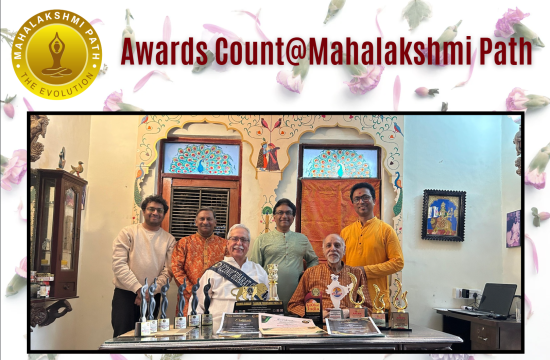


Mahalakshmi Path – The Evolution Wins Best Feature Film at Tokyo Film & Screenplay Awards
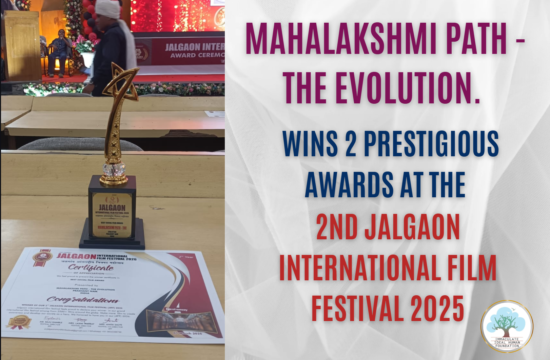
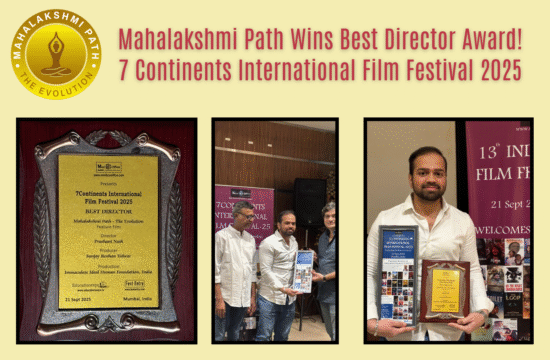
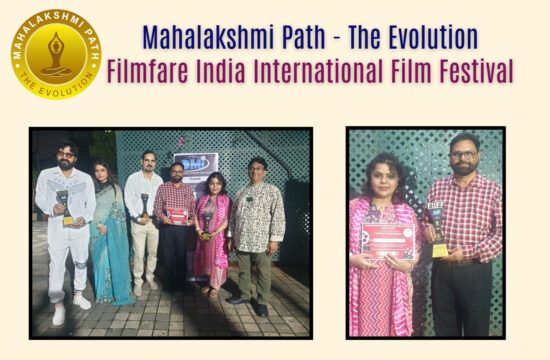
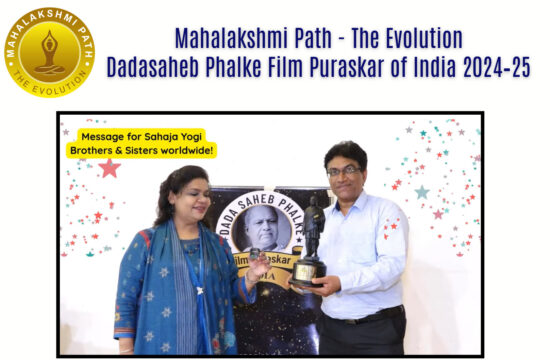
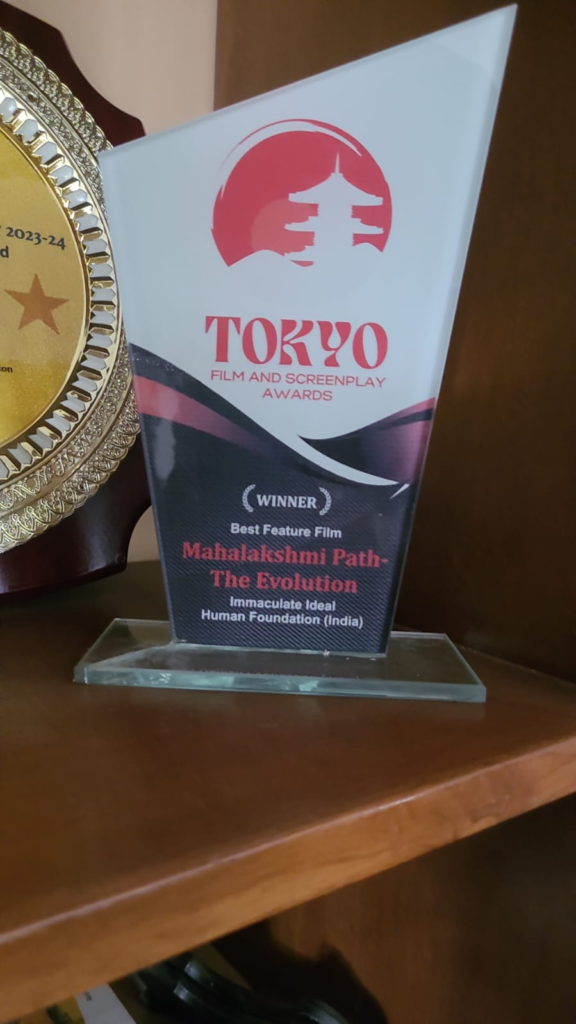
We are delighted to share the wonderful news that Mahalakshmi Path – The Evolution has won the Best Feature Film Award at the Tokyo Film & Screenplay Awards. This recognition is a moment of immense joy and gratitude for everyone who contributed to bringing this film to life.
This achievement belongs not only to the filmmakers but to the entire team of Immaculate Ideal Human Foundation and the many Sahaja Yogis who came forward with dedication, love, and collective spirit to support the making of the film. Your encouragement, effort, and faith made this journey possible.
Mahalakshmi Path – The Evolution is more than a film—it is a sincere attempt to share the transformative experience of spirituality and inner evolution. Winning this award inspires us to continue our mission of spreading the message of inner awakening and universal harmony.
We extend our heartfelt congratulations and gratitude to every member of the team and all well-wishers who stood by us throughout this journey.
May this be another step toward spreading the joy of divinity across the world.
Thank you all for being part of this beautiful journey.
| Evaluation Criteria | Score |
|---|---|
| Originality / Creativity | 9 / 10 |
| Direction | 8 / 10 |
| Writing | 7 / 10 |
| Cinematography | 8 / 10 |
| Performances | 8 / 10 |
| Production Value | 9 / 10 |
| Pacing | 4 / 10 |
| Structure | 7 / 10 |
| Sound / Music | 9 / 10 |
| Average Rating | 7.7 / 10 |
| Recommendation | Award Worthy |
From the Desk of Tokyo Film & Screenplay Awards
In MAHALAKSHMI PATH – THE EVOLUTION, director Prashant Naik constructs a sprawling family saga that functions as both a domestic drama and a devotional treatise. The narrative centers on two sisters, Sheetal and Samaira, who navigate the complexities of modern matrimony through the spiritual lens of Sahaja Yoga meditation.
Sheetal, married into the affluent Singhania clan, faces a quiet crisis: her mother-in-law is heavily sedated by grief over an estranged daughter, Pritha. Sheetal takes it upon herself to be the emotional anchor, balancing her husband Arvind’s morale while orchestrating a reunion to heal the family’s fractured lineage. Parallel to this, Samaira’s life with her husband, NGO-runner Navneet, is thrown into chaos by the arrival of her westernized cousins, Pony and Pinky.
When a night of excess leads to a fatal traffic accident and a media firestorm, Samaira’s marriage threatens to collapse under the strain.
The film posits that these external crises—ranging from legal turmoil to the infertility struggles of a visiting sister-in-law—are resolved not merely through action, but through spiritual alignment. The narrative arc is one of transformation, suggesting that when the “Grihalakshmi” (the housewife as a domestic goddess) finds inner satisfaction, she evolves into “Mahalakshmi,” a force of universal evolution and joy.
Stylistically, the film occupies a specific and vibrant space within Indian cinema, where genre boundaries are porous. It is a unique synthesis of family soap opera, spiritual instructional, and high melodrama. To the uninitiated Western eye, the film’s shifts in tone—oscillating between grave legal consequences and miraculous spiritual conceptions—might appear jarring or heightened. However, viewed through the lens of Bollywood’s emotive tradition, these elements are not contradictions but rather essential “spice.”
The theatricality of the acting is a feature, not a bug; it serves to elevate the characters from mere people into moral archetypes representing patience, vice, and redemption. Technically, Naik proves that a strong command of film language is the universal constant of watchability. The cinematography and editing work in tandem to manage the film’s multiple subplots, creating a cohesive narrative flow even when the script leans heavily into didacticism.
The visual grammar is polished, using the camera not just to record dialogue, but to underscore the shifting power dynamics and emotional states of the household. Ultimately, MAHALAKSHMI PATH – THE EVOLUTION is a film of unwavering conviction. It is a testament to the belief that the domestic sphere is a spiritual battleground. While its specific devotional logic may appeal most strongly to the faithful, its execution demonstrates a capable cinematic hand. It is a distinct mix of style and substance—a modern parable that insists the remedy for the chaos of the outside world is found deep within the meditative silence of the home.
You can contact Tokyo Film & Screenplay Awards by replying to this email or sending an email to tokyofilmawards@bestfilmawards.com